
The birth of Jesus Christ fulfilled centuries of prophecy and validated God’s faithfulness to His promises.
By Evangelist Peter Gee-Editor in Chief, Christianity News Daily
12/09/2025
Introduction
The birth of Jesus Christ stands as one of the most documented and anticipated events in human history. Far from being a sudden or isolated occurrence, His arrival was foretold across centuries through prophecy, covenant, and divine promise. From the opening chapters of Genesis to the final prophetic voices of the Old Testament, Scripture consistently points toward a coming Redeemer. When Jesus was born in Bethlehem, those ancient promises found their fulfillment, marking a decisive moment in God’s redemptive plan for humanity.
The First Promise of Redemption
The promise of the Messiah appears immediately after humanity’s fall. In Genesis 3:15, God declared to the serpent, “And I will put enmity between you and the woman, and between your seed and her Seed; He shall bruise your head, and you shall bruise His heel.” Often referred to as the first messianic prophecy, this statement revealed that deliverance would come through the Seed of the woman and that the coming Redeemer would ultimately defeat sin and Satan. From that moment forward, human history moved along a redemptive trajectory toward the birth of Christ.
The Covenant Line Through Abraham
As Scripture unfolds, God progressively clarified the lineage through which the Messiah would come. The promise moved from Adam to Abraham when God declared in Genesis 12:3, “And in you all the families of the earth shall be blessed.” This promise extended beyond national Israel and pointed toward global redemption. The apostle Paul confirms in Galatians 3:16 that this blessing referred specifically to Christ, identifying Him as the singular Seed through whom salvation would be offered to all nations.
Judah and the Promise of Kingship
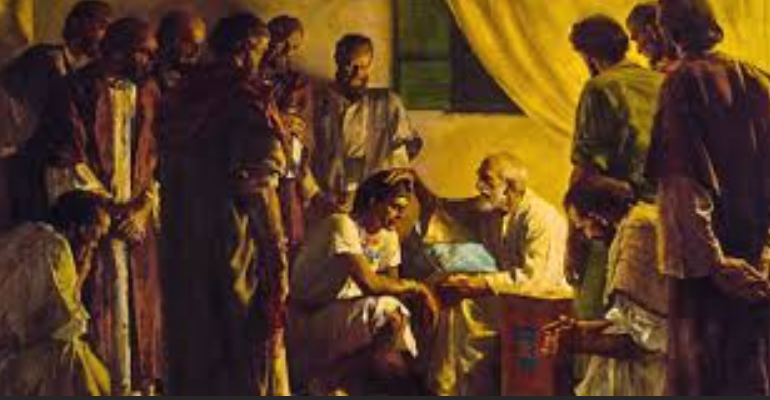
Further specificity emerged in Jacob’s prophetic blessing over his sons. Speaking of Judah, Jacob declared, “The scepter shall not depart from Judah, nor a lawgiver from between his feet, until Shiloh comes; and to Him shall be the obedience of the people” (Genesis 49:10). This prophecy established Judah as the tribe from which the Messiah would arise and introduced the messianic title “Shiloh,” understood as the One who brings peace and rightful authority. Scripture consistently presents Jesus as the fulfillment of this royal and covenantal promise.
Prophetic Revelation Through Isaiah
Centuries later, the prophet Isaiah provided unprecedented detail concerning the Messiah’s birth and identity. Isaiah 7:14 foretold, “Behold, the virgin shall conceive and bear a Son, and shall call His name Immanuel.” This prophecy pointed to a miraculous birth and affirmed the divine nature of the child to come, as “Immanuel” means “God with us.”
Isaiah further revealed the Messiah’s titles and authority, stating, “For unto us a Child is born, unto us a Son is given; and the government will be upon His shoulder” (Isaiah 9:6). The names attributed to this child—Wonderful, Counselor, Mighty God, Everlasting Father, Prince of Peace—affirm His divinity and eternal kingship.
The Birthplace Foretold
The prophet Micah narrowed the prophecy even further by identifying Bethlehem as the Messiah’s birthplace. Micah 5:2 declares that from this small town would come the Ruler whose “goings forth are from of old, from everlasting.” When Mary and Joseph traveled to Bethlehem due to a Roman census, they unknowingly walked in direct fulfillment of divine prophecy.
The Humility of the Nativity
Luke’s Gospel records the birth of Jesus with striking simplicity. Jesus was born in humble surroundings and laid in a manger because there was no room at the inn (Luke 2:7). This humble entrance reflected the nature of His mission. Though He was King, He came as a servant, identifying with the poor and the lowly.
Heaven Announces the Savior
God chose shepherds—men of modest status—to receive the first public announcement of Christ’s birth. An angel proclaimed, “For there is born to you this day in the city of David a Savior, who is Christ the Lord” (Luke 2:11). This declaration emphasized not only the identity of the child but His mission as Savior.
The scene culminated with a multitude of heavenly hosts praising God and declaring, “Glory to God in the highest, and on earth peace, goodwill toward men” (Luke 2:14). Heaven praised because redemption had entered the world.
Witnesses From the Nations
Matthew’s Gospel records the arrival of wise men from the East, guided by a star that signaled the birth of the King of the Jews (Matthew 2:2). Their journey demonstrated that Christ’s mission extended beyond Israel. The gifts they presented—gold, frankincense, and myrrh—symbolized His kingship, priesthood, and sacrificial death, pointing ahead to the cross even at His birth.
The Word Made Flesh
The apostle John provided the theological foundation for the nativity, affirming that Jesus was not merely sent by God but was God Himself. “In the beginning was the Word, and the Word was with God, and the Word was God” (John 1:1). John later declares, “And the Word became flesh and dwelt among us” (John 1:14), summarizing the miracle of the incarnation.
Conclusion
The birth of Jesus Christ fulfilled centuries of prophecy and validated God’s faithfulness to His promises. From the Seed foretold in Genesis to the Savior announced in Bethlehem, Scripture presents a unified testimony of redemption. Christ’s birth was not the end of the story but the beginning of God’s decisive intervention into human history. As Matthew 1:21 proclaims, Jesus was born “to save His people from their sins.” The message of the nativity remains unchanged: God kept His word, the Savior has come, and through Him, hope was restored to the world.