
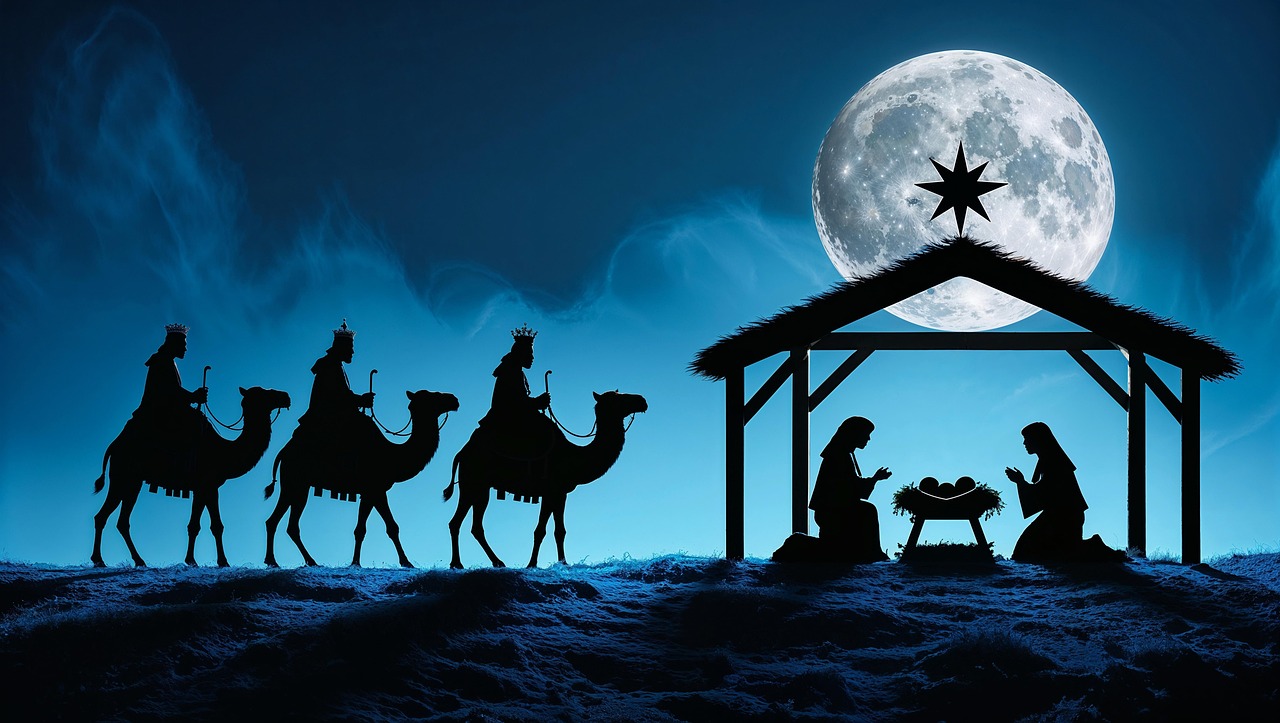
Matthew’s Gospel presents the birth of Jesus Christ as the arrival of the long-awaited King. Through prophetic fulfillment, divine intervention, and heavenly testimony, Scripture confirms that Jesus is the rightful heir to David’s throne and the Savior of the world.
By Evangelist Peter Gee-Editor in Chief, Christianity News Daily
12/09/2025
Introduction
The Gospel of Matthew opens with a clear declaration that the birth of Jesus Christ was not accidental, symbolic, or disconnected from history. From its very first verse, Matthew identifies Jesus as “the Son of David, the Son of Abraham” (Matthew 1:1), anchoring His birth firmly within God’s covenant promises. Unlike modern portrayals of Christmas that emphasize atmosphere over meaning, Matthew presents the nativity as a royal event—the arrival of a King whose lineage, authority, and mission were divinely established long before His birth.
Matthew’s account of the birth of Jesus Christ is uniquely structured to show that Jesus is the rightful King of Israel and the legitimate heir to the throne of David. Through genealogy, prophecy, divine intervention, and the testimony of Gentile witnesses, Matthew reveals why the Messiah had to be born and why humanity desperately needs Him for restoration to God.
The Genealogy That Establishes Kingship
Matthew begins not with a manger but with a genealogy. While genealogies are often overlooked by modern readers, they were essential to Jewish identity and legal inheritance. Matthew 1:2–16 traces Jesus’ lineage from Abraham through David to Joseph, establishing Jesus’ legal right to kingship.
This genealogy serves several purposes. First, it confirms God’s promise to Abraham that through his Seed all nations would be blessed (Genesis 12:3). Second, it affirms the Davidic covenant, in which God declared, “I will establish the throne of his kingdom forever” (2 Samuel 7:13). Jesus stands as the fulfillment of both covenants.
Matthew’s genealogy also highlights God’s grace. It includes figures marked by failure, scandal, and sin, reminding readers that redemption has always been God’s plan. Christ did not come through a flawless human lineage but entered history to redeem broken humanity.
The Virgin Birth and Divine Origin
Matthew moves swiftly from genealogy to divine intervention. Matthew 1:18 states that Mary “was found with child of the Holy Spirit.” This was not a natural conception but a supernatural act of God. When Joseph considered quietly ending the engagement, an angel appeared to him in a dream, saying, “That which is conceived in her is of the Holy Spirit” (Matthew 1:20).
The virgin birth fulfilled Isaiah’s prophecy: “Behold, the virgin shall be with child, and bear a Son, and they shall call His name Immanuel” (Isaiah 7:14; Matthew 1:23). This truth is foundational to Christian theology. Jesus did not inherit a sinful nature, and He was both fully God and fully man.
Matthew makes clear that Jesus’ kingship is unlike earthly rule. He was not crowned through political power or military conquest but through divine appointment. God Himself initiated the incarnation because humanity could not redeem itself.
Jesus Christ and the Name Above All Names
The angel instructed Joseph to name the child Jesus, “for He will save His people from their sins” (Matthew 1:21). In biblical tradition, names reveal identity and purpose. The name Jesus means “The Lord saves.” His kingship was inseparable from His mission of redemption.
Matthew emphasizes that Christ did not come merely to reform society or inspire morality. He came to address humanity’s greatest problem—sin. Without forgiveness and reconciliation with God, no earthly kingdom or government could bring lasting peace.
Born in Bethlehem According to Prophecy
Matthew 2 confirms that Jesus was born in Bethlehem, fulfilling Micah 5:2. When wise men arrived in Jerusalem asking about the “King of the Jews,” King Herod was troubled. Jewish religious leaders confirmed the prophecy that the Messiah would be born in Bethlehem.
This moment exposes a sharp contrast. Earthly rulers like Herod clung to fragile power, while heaven announced the arrival of an eternal King. The religious leaders knew the prophecy but failed to seek the Messiah, revealing how knowledge without obedience leads to spiritual blindness.
The Wise Men and Gentile Witnesses
Matthew alone records the visit of the wise men from the East. These Gentile scholars recognized celestial signs pointing to the birth of a King and traveled far to worship Him. Their declaration—“Where is He who has been born King of the Jews?” (Matthew 2:2)—confirmed Jesus’ royal identity.
Their gifts carried prophetic meaning. Gold represented kingship. Frankincense symbolized priesthood. Myrrh foreshadowed death and sacrifice. Even at His birth, Christ’s mission was already unfolding.
The inclusion of the wise men demonstrated that Jesus came not only for Israel but for the nations. Matthew’s Gospel would later close with the Great Commission, commanding disciples to make disciples of all nations (Matthew 28:19).
Opposition to the True King
Herod’s response to Jesus’ birth was fear, not faith. Viewing Christ as a threat to his authority, he ordered the massacre of male children in Bethlehem (Matthew 2:16). This tragic event fulfilled Jeremiah’s prophecy of Rachel weeping for her children (Jeremiah 31:15).
Matthew reveals a timeless truth: the kingdom of Christ confronts earthly power structures. Darkness resists the light, yet God’s purposes cannot be thwarted. Joseph, warned by an angel, fled with Mary and Jesus to Egypt, fulfilling Hosea 11:1: “Out of Egypt I called My Son.”
Jesus the True and Greater King
Matthew presents Jesus not only as King by birthright but as King by obedience. Unlike Israel’s past kings, Jesus remained faithful to God’s will. His life, teachings, miracles, and ultimate sacrifice confirmed His authority.
Though born King, Jesus did not immediately claim an earthly throne. He later declared, “My kingdom is not of this world” (John 18:36). His reign is spiritual, eternal, and redemptive.
Why Humanity Needs This King
Matthew’s nativity account answers a crucial question: why humanity needs Jesus Christ. Humanity’s problem is not merely social injustice, ignorance, or moral decline—it is separation from God due to sin. Earthly rulers offer temporary solutions; Christ offers eternal redemption.
Only a sinless King could reconcile humanity to God. Only a divine Savior could bridge heaven and earth. Jesus was born King so He could reign over hearts transformed by grace.
Conclusion
Matthew’s Gospel presents the birth of Jesus Christ as the arrival of the long-awaited King. Through prophetic fulfillment, divine intervention, and heavenly testimony, Scripture confirms that Jesus is the rightful heir to David’s throne and the Savior of the world.
At Christmas, the world celebrates a scene it often misunderstands. Behind the manger stands a King. Behind the child stands eternity. Jesus Christ was born not merely to be admired, but to be worshiped, obeyed, and trusted as Lord.